
Hydroponics Trends Reshaping Agriculture for 2026 and Beyond

Hydroponics is changing how we grow food, offering solutions to many challenges faced by traditional farming. As we approach 2026, new trends in hydroponics are reshaping agriculture by making it more efficient, sustainable, and accessible. These trends include vertical farming, smart farming with IoT, AI and automation, precision nutrient management, water-efficient cultivation, urban farming, sustainable agriculture, and the rising demand for pesticide-free produce. This post explores these developments and how they are creating fresh opportunities for farmers and entrepreneurs.
Vertical Farming Expands Space and Yield
Vertical farming uses stacked layers to grow crops indoors, maximizing space and increasing yield per square foot. This method suits urban areas where land is scarce and expensive. By growing upwards, farmers can produce more food in smaller areas, reduce transportation costs, and supply fresh produce locally. Vertical farms often use hydroponic systems to deliver nutrients directly to plants, speeding growth and improving quality.
Smart Farming with IoT Connects Data and Control
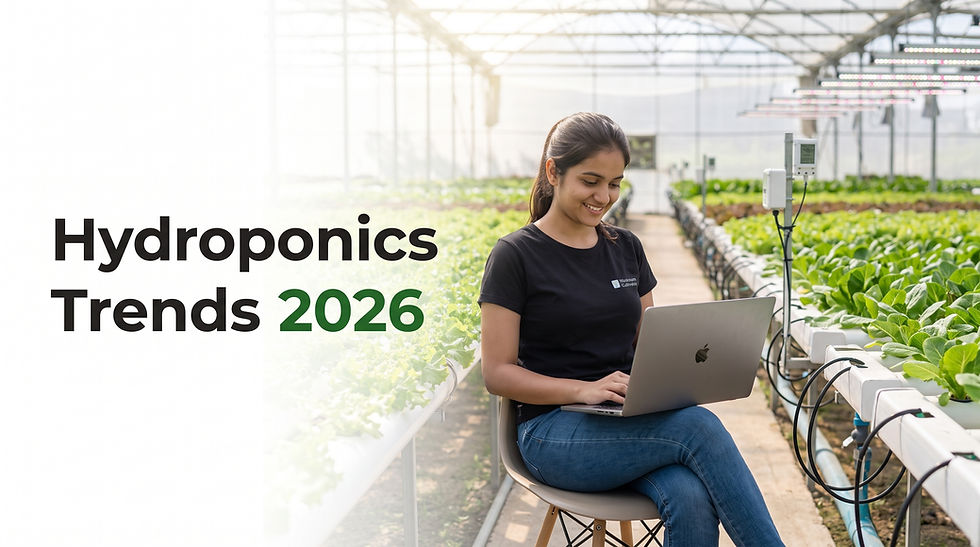
Internet of Things (IoT) devices are becoming common in hydroponics. Sensors monitor temperature, humidity, light, pH, and nutrient levels in real time. This data helps farmers adjust conditions quickly to optimize plant health. Automated systems can control water flow, lighting, and nutrient delivery based on sensor feedback. This connectivity reduces labor, cuts waste, and improves crop consistency.
AI and Automation Drive Efficiency
Artificial intelligence (AI) analyzes data collected from IoT sensors to predict plant needs and detect problems early. AI-powered robots can plant seeds, prune plants, and harvest crops with precision. Automation lowers human error and labor costs while increasing productivity. These technologies allow farms to operate 24/7 with minimal supervision, making hydroponics more scalable.
Precision Nutrient Management Improves Growth
Managing nutrients precisely is critical in hydroponics. Advances in nutrient formulations and delivery systems ensure plants get exactly what they need at each growth stage. Farmers use sensors to monitor electrical conductivity (EC) and pH levels, adjusting nutrient mixes accordingly. This precision reduces nutrient waste and prevents deficiencies or toxicities, resulting in healthier plants and higher yields.
Water-Efficient Cultivation Saves Resources
Hydroponics uses up to 90% less water than traditional soil farming. New systems recycle water and nutrients, minimizing waste. Water-efficient cultivation is vital as water scarcity grows worldwide. By reducing water use, hydroponics supports sustainable agriculture and helps farmers in drought-prone regions maintain production.
Urban Farming Brings Food Closer to Consumers
Urban hydroponic farms are popping up in cities, bringing fresh produce closer to consumers. These farms reduce transportation emissions and spoilage by growing food near where it is eaten. Urban farming also creates jobs and educates communities about sustainable food production. Hydroponics fits well in urban settings because it requires less space and can be set up indoors or on rooftops.
Sustainable Agriculture Meets Consumer Demand
Consumers increasingly want food grown without pesticides and with minimal environmental impact. Hydroponics meets this demand by growing crops in controlled environments free from soil-borne pests and diseases. This reduces or eliminates the need for chemical pesticides. Sustainable practices like using renewable energy and biodegradable materials are also becoming common in hydroponic farms.
Growing Demand for Pesticide-Free Produce
The market for pesticide-free fruits and vegetables is expanding rapidly. Hydroponic farms can guarantee clean, safe produce by controlling every aspect of growth. This transparency appeals to health-conscious consumers and retailers. Farmers who adopt hydroponics can tap into premium markets and build strong brands based on quality and safety.

Maximum Cultivator's 90-Day Modern Hydroponics Course
For those interested in mastering hydroponics, Maximum Cultivator offers a comprehensive 90-day course designed to build practical skills and expert knowledge. This course provides a certificate upon completion, validating your expertise in modern hydroponic farming.
What the Course Covers
Practical Training: Hands-on experience with hydroponic systems to build confidence and competence.
Nutrient Management: Learn how to prepare and adjust nutrient solutions for different crops.
pH & EC Monitoring: Understand how to measure and maintain optimal pH and electrical conductivity levels.
Germination Techniques: Master seed starting methods to ensure high germination rates.
Commercial Hydroponics Guidance: Get insights into scaling up operations and managing a profitable hydroponic farm.
Supporting Resources from Maximum Cultivator
Alongside the course, Maximum Cultivator provides specialized books and guides that help learners avoid common mistakes and build successful ventures:
Nutrient Management Book
Detailed instructions on nutrient formulation and application.
pH & EC Maintenance Guide
Step-by-step methods to monitor and adjust water chemistry.
Germination Guide
Techniques to improve seed germination and early plant growth.
Crop Management Resources
Tips on pruning, pest control, and maximizing yield.
Hydroponics Reference Materials
Comprehensive information on hydroponic systems and troubleshooting.
These resources support learners by providing clear, practical advice that complements the course training.
How Hydroponics Trends Are Transforming Agriculture
The trends shaping hydroponics in 2026 are making agriculture more efficient, sustainable, and adaptable. Vertical farming and urban agriculture bring food production closer to consumers and reduce land use. Smart farming with IoT and AI improves precision and reduces labor. Water-efficient systems conserve vital resources. The focus on pesticide-free produce meets growing consumer demand for healthy, safe food.
These changes open new doors for farmers and entrepreneurs. Hydroponics offers opportunities to grow high-quality crops year-round, even in challenging environments. Learning modern hydroponics skills can lead to profitable businesses and careers in agriculture.
Ready to start your hydroponics journey? Join Maximum Cultivator's 90-Day Modern Hydroponics Coursehttps://www.maximumcultivator.com/hydroponic-courses and gain practical skills, expert knowledge, valuable resources, and a certificate to accelerate your success in modern agriculture.
Comments