
Future of Indian Farming: Hydroponics & Smart Agriculture Explained (2026)

Imagine growing fresh, healthy vegetables right in your home or on a small rooftop, without soil, using less water, and with faster results. This is not a dream but a reality with hydroponic cultivation techniques. As someone passionate about modern farming, I find hydroponics to be a fascinating and promising way to transform agriculture in India. It’s a method that combines science, sustainability, and innovation to grow plants in nutrient-rich water solutions.
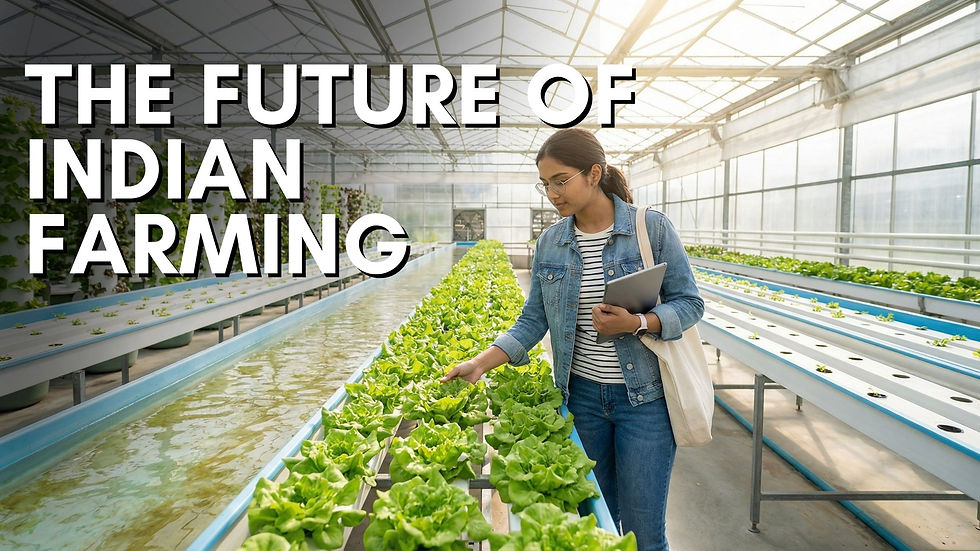
In this blog post, I will take you through the exciting world of hydroponic farming, explain how it works, why it’s gaining popularity, and how you can get started. Whether you are a student, an aspiring entrepreneur, or a home grower, this guide will inspire you to explore hydroponics and see it as a bright future for Indian agriculture.
What is Hydroponic Farming and Why It Matters?
Hydroponic farming is a method of growing plants without soil. Instead, plants grow in a water-based, nutrient-rich solution that provides everything they need to thrive. This technique allows for precise control over nutrients, water, and environment, leading to faster growth and higher yields.
Why is this important for India? Traditional farming faces many challenges here, such as:
Water scarcity: India is a water-stressed country, and conventional farming uses a lot of water.
Land limitations: Urbanization and soil degradation reduce available farmland.
Climate variability: Unpredictable weather affects crop production.
Pest and disease issues: Soil-borne diseases can damage crops.
Hydroponics offers solutions to these problems by using up to 90% less water, requiring less space, and reducing dependency on soil quality. It also allows farming in urban areas, rooftops, and even indoors, making fresh produce accessible to more people.
Exploring Hydroponic Cultivation Techniques
There are several hydroponic cultivation techniques, each with its own advantages. Understanding these will help you choose the right method for your needs.
1. Nutrient Film Technique (NFT)
In NFT, a thin film of nutrient solution continuously flows over the roots of plants, which are supported by a sloped channel. This method is popular for leafy greens like lettuce and spinach because it provides constant access to oxygen and nutrients.
2. Deep Water Culture (DWC)
Plants are suspended in a nutrient-rich oxygenated water solution. This technique is simple and effective, ideal for beginners and small-scale growers.
3. Drip System
Nutrient solution is dripped directly onto the base of each plant. This method is versatile and works well for a variety of crops, including tomatoes and peppers.
4. Aeroponics
Roots hang in the air and are misted with nutrient solution. This technique uses less water and nutrients and promotes rapid growth but requires more technical knowledge.
5. Ebb and Flow (Flood and Drain)
The grow tray is periodically flooded with nutrient solution and then drained. This cycle provides nutrients and oxygen to the roots efficiently.
Each technique has its own setup requirements, costs, and maintenance needs. For beginners, starting with NFT or DWC is often recommended because they are easier to manage and cost-effective.
Is Hydroponic Farming Profitable in India?
One of the most common questions I get is whether hydroponic farming is profitable in India. The answer is a confident yes, but with some important considerations.
Initial Investment and Setup
Hydroponic systems require an initial investment in equipment like grow trays, pumps, nutrient solutions, and sometimes grow lights. However, these costs have been decreasing as technology advances and more suppliers enter the market.
Operational Costs
Hydroponics uses less water and land, which reduces ongoing costs. Energy consumption can vary depending on the system and whether artificial lighting is used.
Crop Yield and Quality
Hydroponic crops grow faster and can be harvested multiple times a year. The quality is often superior, with cleaner and pesticide-free produce, which can fetch higher prices in the market.
Market Demand
Urban consumers in India are increasingly health-conscious and willing to pay a premium for fresh, organic, and locally grown vegetables. Restaurants, supermarkets, and direct-to-consumer sales channels offer good opportunities.
Government Support
Several state governments and agricultural bodies in India are promoting modern farming techniques, including hydroponics, through subsidies, training, and support programs.
Real-Life Example
A small hydroponic farm growing lettuce and herbs in Pune reported a return on investment within the first year by selling directly to local restaurants and organic stores. This shows that with proper planning and marketing, hydroponic farming can be a sustainable business.
How to Start Your Own Hydroponic Farm
Starting hydroponic farming might seem complex, but with the right guidance, it’s quite manageable. Here’s a simple step-by-step plan to get you going:
Step 1: Learn the Basics
Understand the science behind hydroponics, including plant nutrition, water quality, and system types. Online courses and practical e-books are great resources.
Step 2: Choose Your Crops
Start with easy-to-grow plants like lettuce, spinach, basil, or strawberries. These have shorter growth cycles and are in demand.
Step 3: Select a System
Decide on a hydroponic system based on your space, budget, and crop choice. For beginners, NFT or DWC systems are ideal.
Step 4: Set Up Your Farm
Gather materials such as grow trays, water pumps, nutrient solutions, and grow lights if needed. Ensure you have a clean, well-ventilated space.
Step 5: Monitor and Maintain
Regularly check water pH, nutrient levels, and plant health. Keep the system clean to prevent diseases.
Step 6: Harvest and Sell
Harvest crops at the right time for best taste and nutrition. Explore local markets, restaurants, or online platforms to sell your produce.
Step 7: Keep Learning and Scaling
As you gain experience, experiment with different crops and systems. Consider expanding your farm or collaborating with other growers.
The Bright Future of Hydroponic Farming in India
Hydroponic farming is not just a trend; it’s a revolution in how we grow food. With India’s growing population and urbanization, traditional farming alone cannot meet the demand for fresh, nutritious vegetables. Hydroponics offers a sustainable, efficient, and scalable solution.
By embracing hydroponic farming in India, we can:
Conserve water and land resources
Reduce dependency on chemical pesticides
Grow food year-round regardless of weather
Create new job opportunities in agri-tech
Empower small farmers and entrepreneurs

I encourage you to explore this exciting field. Whether you want to grow fresh herbs on your balcony or start a commercial farm, hydroponics makes it possible. With the right knowledge and tools, anyone can become a successful modern farmer.
If you want to dive deeper into this topic, check out resources and courses that can guide you step-by-step in mastering hydroponic cultivation techniques.
For more information on hydroponic farming in India, visit Maximum Cultivator’s website and start your journey today!


Comments