
Top Agritech Careers You Can Pursue with Hydroponics Certification for Success

The world of farming is changing fast. Traditional agriculture faces growing challenges like shrinking arable land and unpredictable weather caused by climate change. These pressures make it harder to grow food the old-fashioned way. At the same time, new technologies are transforming how we farm. Agritech, especially indoor and automated farming methods, is expanding rapidly. Among these innovations, hydroponics stands out as a sustainable and efficient way to grow crops without soil.
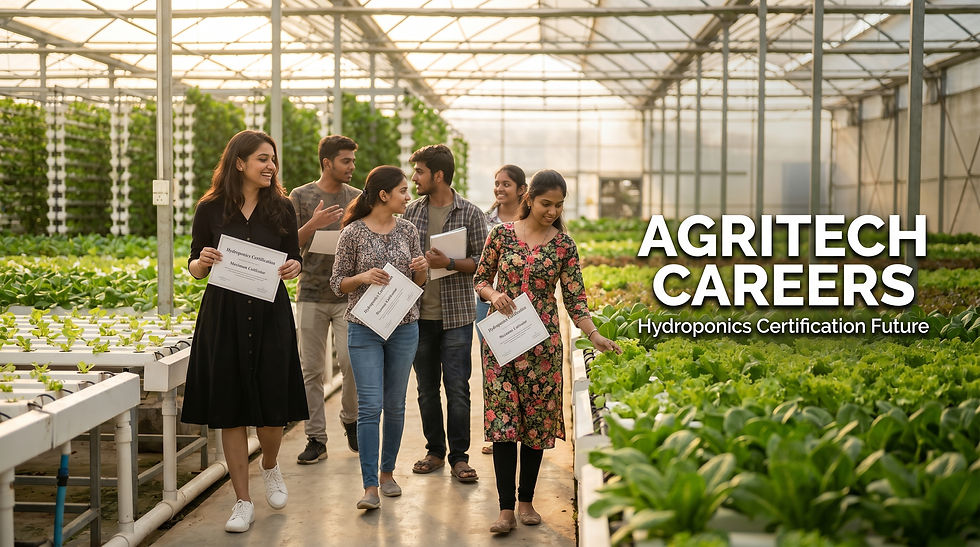
For anyone interested in a future-proof career in agriculture, earning a professional certification in hydroponics is the ultimate way to stand out. It opens doors to exciting jobs in a booming industry that combines science, technology, and farming. This post explores the top agritech careers and explains why a hydroponics certification is the key to success.
The Top 4 Agritech Careers
Agritech offers a variety of rewarding roles that blend farming knowledge with technology skills. Here are four in-demand careers where hydroponics expertise is highly valuable:
Hydroponic Farm Manager
A Hydroponic Farm Manager oversees the daily operations of a hydroponic farm. This role involves managing crop health, scheduling production cycles, and ensuring the farm runs smoothly. Managers coordinate teams, monitor plant growth, and troubleshoot issues like pests or nutrient imbalances. Their goal is to maximize yield and quality while keeping costs under control.
For example, a manager at a leafy greens hydroponic farm might plan harvests to meet weekly market demand, adjust nutrient mixes based on plant growth stages, and maintain equipment like pumps and grow lights. This role requires strong leadership and hands-on experience with hydroponic systems.
Controlled Environment Agriculture (CEA) Specialist
CEA Specialists focus on optimizing the indoor environment where crops grow. They control factors such as temperature, humidity, CO2 levels, and light spectrum to create ideal conditions for plants. Automation systems like sensors and climate controllers are part of their toolkit.
By fine-tuning these variables, CEA Specialists help increase crop yields and reduce resource use. For instance, they might program LED lighting schedules to mimic natural sunlight or adjust ventilation to prevent mold. Their work ensures plants grow faster and healthier in a controlled setting.
Nutrient & Water Chemistry Technician
This role specializes in managing the chemistry of water and nutrients in hydroponic systems. Nutrient & Water Chemistry Technicians monitor electrical conductivity (EC), pH levels, and water quality to maintain the perfect balance for plant growth. They design complex nutrient recipes tailored to different crops and growth stages.
For example, a technician might test water samples daily, adjust nutrient concentrations, and troubleshoot issues like nutrient lockout or contamination. Their expertise ensures plants receive exactly what they need for optimal development.
Urban Farm Consultant / Entrepreneur
Urban Farm Consultants or Entrepreneurs design and set up indoor farms in cities for commercial or residential clients. They combine knowledge of hydroponics, space planning, and business to create profitable farming solutions. These professionals help restaurants, schools, or community groups grow fresh produce locally.
An urban farm consultant might work with a restaurant to build a vertical hydroponic garden on-site or help a community center start a small indoor farm to supply fresh herbs. This career blends creativity with technical skill and offers opportunities to innovate in urban food production.

Why a Certification Changes Everything
Many people try hydroponics as a hobby, but a formal certification sets professionals apart in the job market. A certification proves that you have practical, real-world skills that employers value. It shows you can design systems, plan crops, manage nutrient solutions, and handle the technical challenges of hydroponic farming.
Employers prefer certified candidates because they require less training and can contribute immediately. Certification programs also teach the latest industry standards and technologies, keeping you up to date. This knowledge is crucial in a fast-evolving field like agritech.
For example, a certified hydroponic farm manager can confidently set up automated nutrient dosing systems or troubleshoot lighting issues, skills that hobbyists might lack. Certification also builds credibility, helping you secure higher-paying roles or start your own business.
Position Yourself for Success with Maximum Cultivator
The fastest and most reliable way to enter these high-paying agritech careers is through structured, certified training. Maximum Cultivator offers the Best Online Hydroponic Course: 90-Day Certificate Program, recognized as India’s top-rated online program for breaking into the industry.
This course provides hands-on practical learning, covering everything from system design to crop planning and nutrient management. You will master commercial hydroponic farming techniques through clear, step-by-step lessons. The program prepares you to take on roles like Hydroponic Farm Manager or Urban Farm Consultant with confidence.
If you want to build a future in agritech, earning a hydroponics certification from Maximum Cultivator is the smartest step. It gives you the skills, knowledge, and credibility to thrive in a growing sector that feeds the world sustainably.


Comments