
Hydroponic Pests & Diseases: How to Fix Them 🌱

Three days ago, your hydroponic lettuce looked perfect. Bright green, standing tall, roots healthy and white.
Today, something's wrong. A few leaves are curling. There's a sticky residue on the undersides. And you swear you saw tiny white insects flutter away when you leaned in for a closer look.
If this sounds familiar, you're not alone, and you're definitely not doing something fundamentally wrong. Hydroponic crops, just like soil-grown ones, are living plants. And living plants attract pests and disease, no matter how clean your system looks.

This guide walks you through the most common hydroponic pests and diseases in India, how to tell them apart from simple nutrient or environmental issues, and exactly what to do about each one.
Can Hydroponic Plants Really Get Pests and Diseases?
Yes, absolutely. This is one of the biggest myths new growers believe.
Soilless farming removes soil-borne pests and diseases, which is a genuine advantage. But it does not create a sealed, pest-proof bubble. Insects still fly in through vents and doorways. Fungal spores travel through air and water. Bacteria can hitch a ride on contaminated tools, hands, or new seedlings brought into your system.
In fact, some hydroponic environments, warm, humid, and consistently watered, can actually be quite comfortable for certain pests and fungal diseases if growers aren't careful with airflow and hygiene.
The good news? Hydroponic systems also give you more control than soil ever could. Once you understand what you're dealing with, prevention and treatment are often more straightforward.
Pests vs Diseases: What's the Difference?
Before diagnosing anything, it helps to separate these into clear categories.
Pests – Living insects or mites (aphids, whiteflies, thrips, spider mites, fungus gnats) that physically feed on or damage plants
Fungal diseases – Caused by fungal organisms (powdery mildew, botrytis, pythium) that thrive in specific humidity and airflow conditions
Bacterial diseases – Less common but possible, often linked to contaminated water or tools
Environmental/nutrient problems – Not living organisms at all, but issues like pH imbalance, EC problems, or heat stress that can mimic disease symptoms
Mixing these up is exactly why so many beginners "treat" a nutrient deficiency with pesticide, or ignore an actual pest problem thinking it's just yellowing from stress. Getting this categorization right is step one.
Most Common Hydroponic Pests
Aphids
What it looks like: Tiny, pear-shaped insects, usually green, black, or yellow, clustering on new growth and leaf undersides.
Signs/symptoms: Curling leaves, sticky residue (honeydew) on leaves, stunted new growth, sometimes sooty mold growing on the honeydew.
Why it appears: Aphids are attracted to soft, new growth and often enter through open vents or on contaminated clothing/tools.
Crops commonly affected: Lettuce, basil, spinach, and most leafy greens.
Prevention: Screen vents and entry points, inspect new seedlings before introducing them to your system, maintain good airflow.
Practical control methods: Physical removal (wiping leaves gently), yellow sticky traps to monitor populations, encouraging natural predators like ladybugs in greenhouse setups.
Common beginner mistake: Ignoring a small cluster because "it's just a few," allowing the population to explode within days since aphids reproduce extremely fast.
Whiteflies
What it looks like: Small, moth-like white insects that fly up in a cloud when you disturb the plant.
Signs/symptoms: Yellowing leaves, sticky honeydew residue, tiny white insects visible on the underside of leaves.
Why it appears: Whiteflies thrive in warm, humid environments and enter through open doors, vents, or infected seedlings.
Crops commonly affected: Tomatoes, capsicum, cucumbers, and various leafy greens.
Prevention: Yellow sticky traps near entry points, screening on vents, regular inspection of leaf undersides.
Practical control methods: Sticky traps for population monitoring and reduction, removing heavily infested leaves, improving airflow to reduce humidity pockets where whiteflies thrive.
Common beginner mistake: Only checking the top of leaves during inspection, missing whitefly colonies that hide underneath.
Thrips
What it looks like: Very small, slender insects, often difficult to see without close inspection, usually pale yellow to brown.
Signs/symptoms: Silvery streaks or scarring on leaves, distorted new growth, tiny black fecal spots on leaf surfaces.
Why it appears: Thrips often arrive on infected plant material or through open vents during warmer months.
Crops commonly affected: Basil, capsicum, and various flowering crops.
Prevention: Blue sticky traps (thrips are particularly attracted to blue), quarantine new plants before introducing them to the main system.
Practical control methods: Sticky traps, removing and disposing of heavily infested leaves, maintaining consistent inspection routines.
Common beginner mistake: Mistaking thrips damage for nutrient deficiency due to the silvery, streaked leaf appearance.
Spider Mites
What it looks like: Extremely tiny, often invisible to the naked eye until you notice fine webbing on leaves and stems.
Signs/symptoms: Tiny yellow or white speckling on leaves, fine webbing, leaves eventually turning bronze or dropping.
Why it appears: Spider mites thrive in hot, dry conditions and can spread rapidly in warm hydroponic greenhouses.
Crops commonly affected: Tomatoes, cucumbers, and various leafy crops.
Prevention: Maintain adequate humidity (spider mites prefer dry conditions), regular leaf inspection, quarantine new plants.
Practical control methods: Increasing humidity slightly, physical removal of heavily infested leaves, sticky traps for monitoring.
Common beginner mistake: Not noticing the problem until webbing is already visible, by which point the infestation is often well established.
Fungus Gnats
What it looks like: Small, dark flying insects, often seen hovering near the growing medium or reservoir.
Signs/symptoms: Adult gnats flying around the base of plants, larvae feeding on roots in overly wet growing media.
Why it appears: Fungus gnats are attracted to consistently damp growing media, particularly cocopeat or rockwool that stays overly wet.
Crops commonly affected: Seedlings and young plants in germination trays are especially vulnerable.
Prevention: Avoid overwatering growing media, allow the surface to dry slightly between watering cycles, use yellow sticky traps near germination areas.
Practical control methods: Sticky traps for adults, adjusting watering frequency, ensuring proper drainage in growing media.
Common beginner mistake: Overwatering seedling trays "just to be safe," which actually creates ideal fungus gnat breeding conditions.
Caterpillars
What it looks like: Larval stage of moths or butterflies, varying in color and size depending on species.
Signs/symptoms: Chewed holes in leaves, visible droppings (frass), sometimes the caterpillar itself visible on inspection.
Why it appears: Adult moths lay eggs on leaves, usually entering through open vents or doors, especially in evening hours.
Crops commonly affected: Leafy greens and brassicas like kale and cabbage varieties.
Prevention: Screen doors and vents, especially during evening hours when moths are most active, inspect leaves regularly for eggs.
Practical control methods: Physical removal by hand, checking leaf undersides for egg clusters, maintaining screened entry points.
Common beginner mistake: Only looking for the caterpillar itself and missing early-stage eggs, which are much easier to remove before hatching.
Mealybugs
What it looks like: Small, white, cotton-like clusters usually found in leaf joints and stem crevices.
Signs/symptoms: White, fuzzy patches on stems and leaf joints, sticky honeydew residue, stunted growth in severe infestations.
Why it appears: Mealybugs often arrive on infected seedlings or cuttings introduced into the system.
Crops commonly affected: Herbs and various leafy crops, particularly in warm, humid conditions.
Prevention: Quarantine new plants before introducing them, regular inspection of stem joints and leaf undersides.
Practical control methods: Physical removal with a cotton swab, isolating infected plants, improving airflow around affected areas.
Common beginner mistake: Mistaking mealybugs for a fungal growth due to their white, fuzzy appearance.
Most Common Hydroponic Diseases
Root Rot
Symptoms: Brown, slimy, foul-smelling roots (healthy roots are white and firm), wilting despite adequate water, stunted growth, yellowing leaves.
Causes: Low dissolved oxygen in the nutrient solution, water temperatures that are too warm, poor circulation, contaminated water source.
Prevention: Maintain adequate oxygenation (air stones/pumps), keep reservoir temperatures below 24°C where possible, ensure good circulation, use clean water sources.
Management: Remove severely affected roots where possible, flush and sanitize the system, address the underlying oxygen or temperature issue rather than just treating symptoms.
Pythium-Related Root Problems
Symptoms: Similar to general root rot but often spreads faster, roots appear water-soaked and brown, rapid wilting across multiple plants.
Causes: Pythium is a water mold that thrives in warm, low-oxygen, poorly maintained nutrient solutions.
Prevention: Strong oxygenation, cooler reservoir temperatures, regular reservoir cleaning and sanitization between crop cycles.
Management: Isolate and remove affected plants promptly, sanitize the entire system before replanting, review water temperature and oxygenation setup.
Powdery Mildew
Symptoms: White, powder-like coating on leaves and stems, often starting on upper leaf surfaces.
Causes: High humidity combined with poor air circulation; also common when temperature fluctuates significantly between day and night.
Crops commonly affected: Cucumbers, herbs like basil, and various leafy greens.
Prevention: Improve airflow with fans, avoid overcrowding plants, manage humidity levels consistently.
Management: Remove and dispose of affected leaves promptly, improve ventilation immediately, avoid overhead watering that increases leaf surface moisture.
Downy Mildew
Symptoms: Yellow patches on upper leaf surfaces with a corresponding fuzzy, grayish growth on the underside.
Causes: High humidity and moisture on leaf surfaces, often worsened by poor air circulation.
Prevention: Reduce leaf surface moisture, improve airflow, avoid wetting leaves during watering where possible.
Management: Remove infected leaves immediately, improve ventilation, reduce humidity in the growing area.
Botrytis (Grey Mould)
Symptoms: Grey, fuzzy mold growth, typically on damaged or dying plant tissue first, then spreading to healthy areas.
Causes: High humidity, poor air circulation, and existing plant damage or dead plant material left in the system.
Prevention: Remove dead or damaged plant material promptly, maintain good airflow, avoid excess humidity.
Management: Remove and dispose of infected material carefully (don't compost near your growing area), improve ventilation immediately.
Damping-Off
Symptoms: Seedlings collapsing at the soil or medium line shortly after germination, thin and water-soaked stems.
Causes: Overly wet growing medium combined with poor airflow at the germination stage, often linked to fungal pathogens in unsanitized trays.
Prevention: Avoid overwatering germination trays, ensure good airflow around seedlings, sanitize trays and equipment between uses.
Management: Remove affected seedlings immediately to prevent spread, adjust watering practices, sanitize germination equipment thoroughly before the next batch.
Bacterial Disease Issues
Symptoms: Water-soaked spots on leaves, sometimes with a yellow halo, foul odor in severe cases.
Causes: Contaminated water sources, unsanitized tools, or handling plants with wet hands after touching infected material.
Prevention: Use clean, tested water sources, sanitize tools between use, wash hands before handling different plant batches.
Management: Remove affected plants promptly, sanitize the system, and when identification is uncertain, consult local agricultural extension services for accurate diagnosis.
When Yellow Leaves Are NOT a Disease
Here's something worth repeating: yellow leaves don't automatically mean disease or pests. Several non-living factors can cause very similar symptoms.
Nutrient deficiency – Especially nitrogen, magnesium, or iron deficiency, which cause distinct yellowing patterns
Incorrect pH – Locks out specific nutrients even when they're present in your solution
Incorrect EC – Too high or too low, both affecting nutrient and water uptake
Overwatering/root oxygen problems – Roots suffocate without adequate oxygen, mimicking disease symptoms
Heat stress – Excessive temperature can cause wilting and yellowing without any pathogen involved
Light issues – Too much or too little light can stress plants in ways that resemble disease
This is exactly why jumping straight to "it must be a disease" without checking your basics first often leads growers down the wrong path entirely.
Hydroponic Troubleshooting Table
Symptom | Possible Cause | How to Check | What to Do |
Yellow leaves | Nutrient deficiency, pH issue, overwatering | Test pH/EC, inspect roots | Correct pH/EC, adjust watering |
Brown leaf edges | Potassium deficiency, EC too high | Check EC reading | Dilute solution, rebalance nutrients |
Curling leaves | Aphids, heat stress | Inspect leaf undersides | Remove pests, check temperature |
White powder on leaves | Powdery mildew | Visual inspection | Improve airflow, remove affected leaves |
Sticky leaves | Aphids, whiteflies, mealybugs | Check for insects on undersides | Physical removal, sticky traps |
Tiny flying insects | Whiteflies, fungus gnats | Disturb plant, observe | Sticky traps, adjust watering |
Black spots | Fungal or bacterial disease | Closer inspection, isolate plant | Remove affected material, improve airflow |
Wilting plants | Root rot, heat stress, underwatering | Check roots and reservoir temp | Improve oxygenation, adjust temperature |
Brown/slimy roots | Root rot, pythium | Inspect roots directly | Sanitize system, improve oxygenation |
Stunted growth | Nutrient deficiency, pest damage, pH issue | Check pH/EC and inspect leaves | Correct nutrient solution, inspect for pests |
Sudden plant death | Severe root rot, contamination, system failure | Check pump function, reservoir condition | Isolate issue, sanitize system, review water source |
How to Prevent Hydroponic Pests & Diseases
Prevention beats treatment every time in hydroponic farming. Here's what consistently works.
Clean growing environment – Regularly clean trays, channels, and surfaces
Sanitization – Sanitize equipment between crop cycles, not just when problems appear
Healthy seedlings – Start with quality, disease-free seeds and seedlings
Quarantine of new plants – Keep new additions separate for a few days before introducing them to your main system
Air circulation – Use fans to keep air moving and reduce humidity pockets
Humidity management – Monitor and adjust based on crop needs
Temperature management – Avoid extreme fluctuations, particularly in reservoir water
Root-zone oxygen – Ensure adequate aeration through air stones or pumps
Water quality – Test your water source periodically
pH monitoring – Daily checks prevent nutrient lockout issues
EC monitoring – Daily checks prevent both deficiency and toxicity problems
Regular crop inspection – Walk through your system daily, checking leaf undersides and roots
Removing infected plant material – Don't leave dead or diseased material in the system
Integrated Pest Management (IPM) for Hydroponics
Integrated Pest Management, or IPM, simply means using multiple layers of prevention and control rather than relying on one single method.
Monitoring – Regular, scheduled inspection rather than waiting for visible problems
Sticky traps – Yellow and blue traps help detect pest presence early, often before visible damage occurs
Physical removal – Manually removing pests or affected leaves, especially for small infestations
Biological controls – Beneficial insects like ladybugs (for aphids) in appropriate greenhouse settings
Environmental control – Adjusting humidity, airflow, and temperature to make conditions less favorable for pests and disease
Responsible use of approved treatments – When chemical or biological treatments are necessary, always follow product labels for crop-specific approval, correct dosage, and pre-harvest intervals as per Indian agricultural guidelines
If you're ever uncertain about identification or treatment, consulting your local Krishi Vigyan Kendra (KVK) or agricultural extension officer is a genuinely good idea rather than guessing.
Learn Hydroponics Professionally with Maximum Cultivator
Spotting a pest or disease is only the first step. The harder part is understanding why it appeared in the first place, and that usually connects back to nutrient management, pH, EC, root health, and environmental conditions working together.
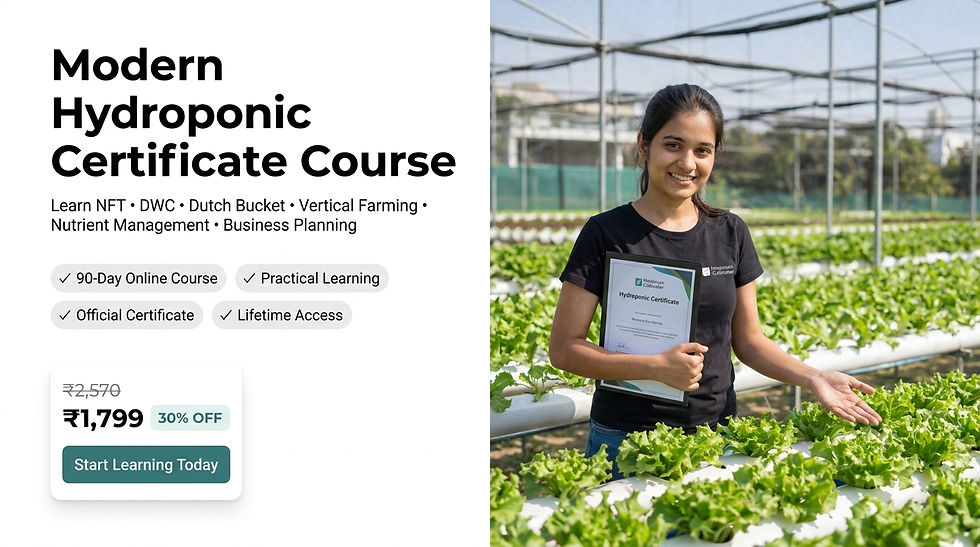
This is exactly the kind of practical, connected knowledge Maximum Cultivator's 90-Day Modern Hydroponic Course is built around. It's a beginner-friendly, structured program that takes learners through nutrient management, pH and EC management, germination, crop management, troubleshooting, and the basics of running a commercial hydroponic operation.
Rather than teaching pest identification in isolation, the course helps learners understand how these systems connect, since a root rot problem is rarely just about the pathogen. It's usually tied to oxygenation, temperature, and water quality as well. Similarly, understanding whether yellowing leaves point to a pest, a nutrient issue, or a pH imbalance requires knowing how to check each one systematically.


Comments